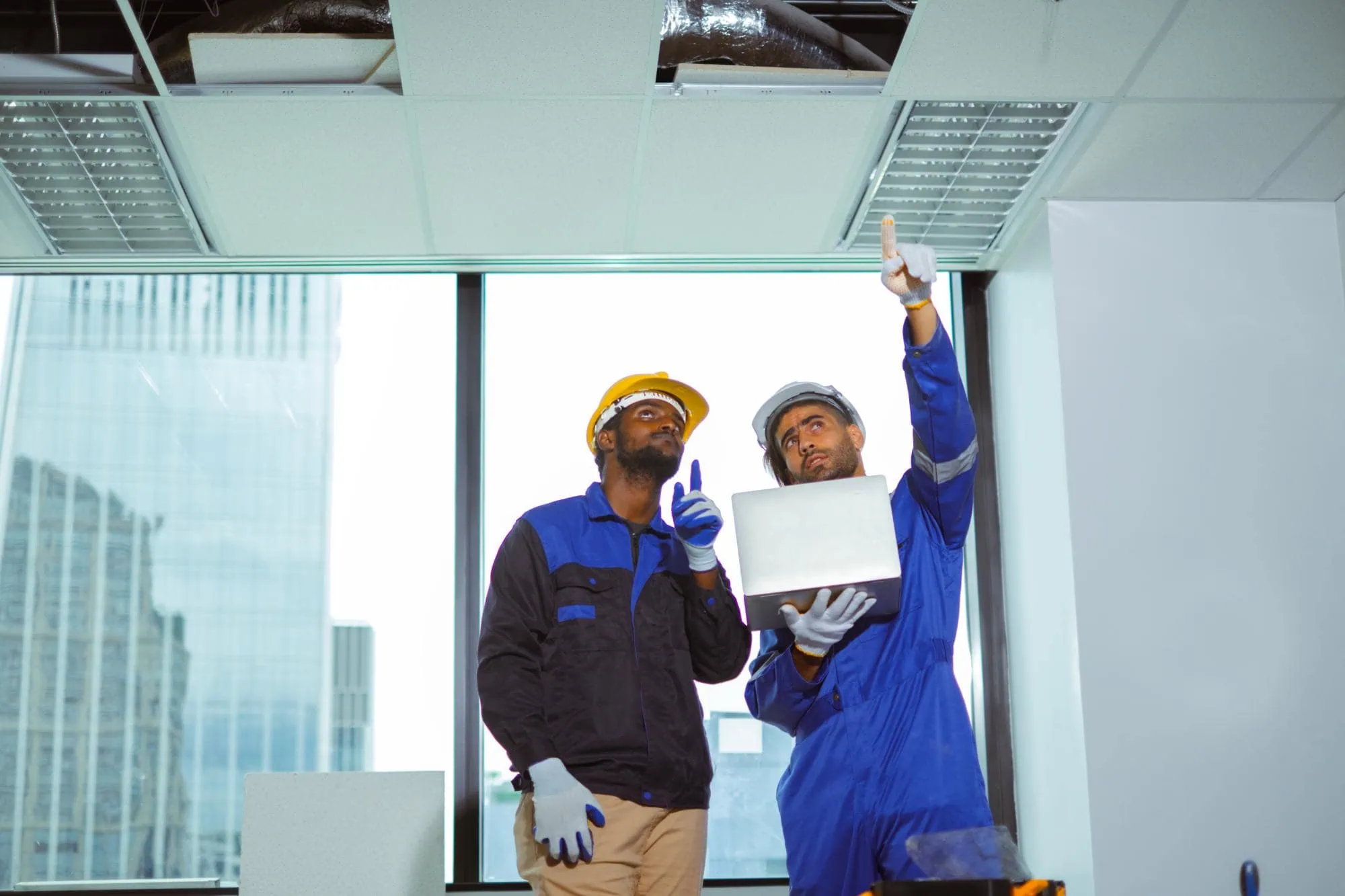
Professional TPP inspections in Manhattan ensuring construction compliance, tenant safety, and avoiding costly violations with experienced engineering expertise.
Share:
Summary:
A tenant protection plan is required for any alteration, construction, or partial demolition of buildings where dwelling units will be occupied during construction, and no permit can be issued without an approved TPP. This isn’t optional paperwork – it’s your legal foundation for construction in occupied buildings.
NYC requires TPP inspections to minimize risks like dust, debris, noise, and other hazards that can affect tenants’ health and safety, helping you avoid fines, protect residents, and maintain safe environments throughout your project. The stakes are real, and the requirements are specific.

TPP elements vary by project scope but must comply with NYC construction codes, housing maintenance codes, noise control codes, and health codes, making detailed provisions for egress, structural safety, and noise restrictions. Each element serves a specific purpose in protecting tenants while allowing construction to proceed.
The plan must specify measures to limit noise according to NYC Noise Control Code, identify construction hours and days, and describe methods to maintain essential services like heat, hot water, electricity, with details on any anticipated disruptions and alternate arrangements. This level of detail isn’t bureaucratic excess – it’s what keeps projects moving and tenants safe.
Health requirements include methods for dust control, debris disposal, pest control, sanitary facilities maintenance, plus compliance with lead and asbestos regulations, housing standards adherence, and structural safety ensuring no work endangers occupants. These requirements reflect real-world construction hazards that impact people’s daily lives.
The documentation requirements are equally important. TPP notices must be clearly displayed in lobbies and within ten feet of elevators on each floor, with work permits, TPP notices, and Safe Construction Bill of Rights prominently posted at main entries.
The 2022 NYC Building Code update made significant changes requiring special inspections for TPP compliance, with current requirements mandating inspections by third parties to ensure construction work follows filed TPPs. This isn’t a suggestion – it’s mandatory for most occupied building projects.
Effective November 7, 2022, NYC Department of Buildings requires all owners to hire special inspection agencies for weekly compliance inspections during ongoing construction in residential occupied buildings. The frequency reflects how quickly conditions can change on active construction sites.
At minimum, inspections must occur before construction begins to document existing conditions, when work starts, weekly during ongoing construction/demolition, when violations are issued to verify corrections, and when work locations or protection methods change. Each inspection point serves a specific compliance and safety purpose.
The requirements apply to multiple dwellings (buildings with more than two families under NYS Multiple Dwelling Law), while 1-2 family homes may be exempt from inspections but must still file TPPs. Understanding these distinctions helps you plan appropriately for your specific project type.
Want live answers?
Connect with a Broadway Inspections expert for fast, friendly support.
Most TPP violations don’t happen because contractors ignore rules – they happen because protection plans don’t account for how construction actually works. This is where professional inspection experience makes the difference between compliance and costly violations.
Experienced inspectors know what to look for: whether temporary fire assemblies are actually fire-rated, if emergency lighting works during power shutoffs, and if noise mitigation measures are effective during actual construction, not just on paper. This practical knowledge prevents problems before they become violations.

TPP violations carry serious financial consequences: failure to file a TPP costs $10,000 for first offense and up to $25,000 for second offense, while compliance failures result in $1,600 OATH violations plus potential $2,500 fire stopping penalties, and failure to post required notices costs $1,250 each. These aren’t just numbers on a penalty schedule.
A $25,000 fine wipes out profit margins and creates liability issues that follow you to future projects, but the real cost isn’t just penalties – it’s stop-work orders, delays, reputation damage, and insurance complications that come with violations. The ripple effects extend far beyond the immediate project.
The 72-hour notification requirement catches many contractors off guard because it applies not just to starting work, but to any changes affecting tenant protection, with violations carrying $1,250 penalties. This requirement reflects how quickly construction conditions can impact tenant safety.
Common violation triggers include inadequate dust control during demolition, blocked egress routes during material deliveries, disrupted essential services without proper tenant notification, and noise violations during restricted hours. Each of these scenarios is preventable with proper planning and inspection oversight.
Seventeen years of experience means knowing that dust control systems working in prewar buildings won’t work in postwar high-rises, understanding that tenant noise complaints aren’t just about decibel levels but frequency, duration, and timing, and recognizing when protection plans look good on paper but won’t work in reality. This practical knowledge can’t be learned from textbooks.
Experience means understanding when architect-specified temporary barriers won’t work because the building’s HVAC system will create pressure differentials making them ineffective. These real-world insights prevent costly mid-project corrections and violations.
Many special inspection agencies send inexperienced recent college graduates instead of seasoned professionals, but thorough reviews and inspections require expertise to examine all aspects of every job until satisfied. The difference shows in inspection quality and violation prevention.
Our local expertise ensures projects adhere to all necessary standards preventing costly delays, while detailed reports highlight critical findings and offer actionable insights enabling swift issue resolution. This combination of knowledge and communication keeps projects moving forward safely and legally.
Tenant protection plans aren’t just paperwork – they’re your shield against costly violations and project delays, with the difference between bare-minimum compliance and robust protection plans potentially saving thousands in penalties while keeping projects on schedule. Getting it right from the start protects both your timeline and budget.
When dealing with NYC’s complex building codes and Department of Buildings’ strict enforcement, you need inspectors who actually know what they’re looking at, not recent graduates learning on your dime. Professional experience translates directly to project success and compliance confidence.
For Manhattan construction projects requiring Tenant Protection Plan inspections, working with Broadway Inspections means direct communication with experienced owners, comprehensive reporting, and the practical knowledge that comes from over 17 years of NYC construction expertise. Your project timeline and tenant safety deserve that level of professional attention.
Article details:
Share:
Continue learning:


Special Inspections You Can Rely On
Our team delivers thorough special inspections and tenant protection plan inspections, guaranteeing the highest standards for every project.
Broadway Inspections
Company
Support
Useful Links