New York City construction demands close attention to the NYC Department of Buildings (DOB) special inspection rules. This guide breaks down the inspections you’ll encounter, how to schedule them, and why they matter for code compliance and project timelines. Misunderstanding these requirements is a common source of delays and extra costs; knowing the process helps teams avoid setbacks and keep permits on track. Below we cover DOB special inspection requirements, scheduling steps, the most common inspection types, how Broadway Inspections supports compliance, and clear answers to frequently asked questions.
What the NYC DOB Requires for Special Inspections on New Buildings
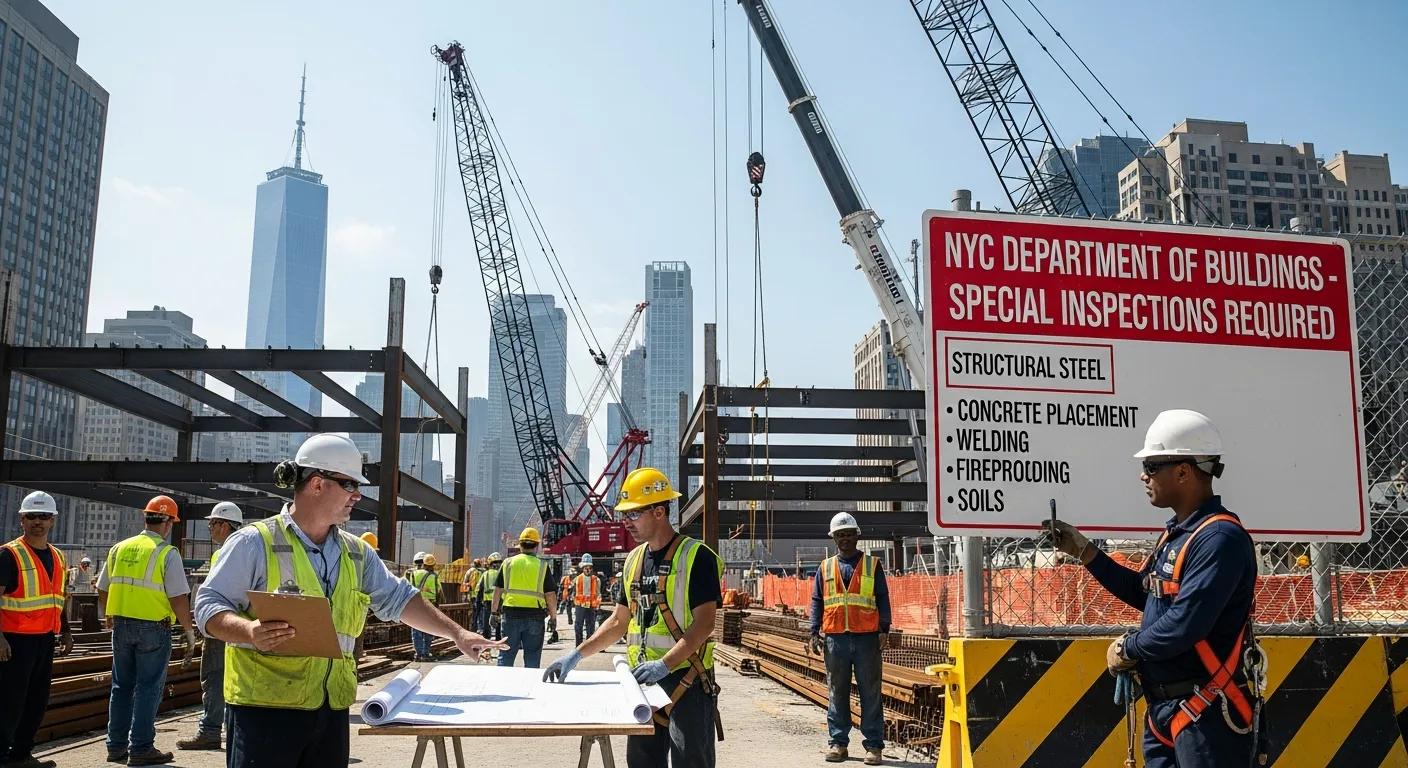
The DOB’s special inspection rules are in place to verify safety and code compliance during construction. Certain trades and assemblies—such as structural framing, fireproofing, concrete, soil work, and welding—require ongoing or periodic inspections. These checks protect building occupants and help owners and contractors avoid fines, work stoppages, or permit issues.
Which Special Inspections Does the NYC DOB Typically Require?
The DOB mandates several focused inspections; the most common include:
- Structural Inspections: Verification that beams, columns, connections, and other structural components are installed per design and meet safety standards.
- Fireproofing Inspections: Confirmation that fireproofing materials are applied to the correct coverage, thickness, and density required by the NYC Fire Code.
- Concrete Inspections: Checks on mix design, reinforcement, placement, testing, and curing to confirm compliance with project specifications.
- Soil and Foundation Inspections: Testing and observation of subsurface conditions, footings, piles, and foundation work to ensure long-term stability.
- Welding and Bolting Inspections: Oversight of weld procedures, qualifications, and bolted connections to meet the NYC Building Code and approved plans.
Recognizing which inspections apply to your scope is a foundational step toward compliance and safety.
How Special Inspections Enforce Building Code Compliance in NYC
Special inspections add a formal compliance layer throughout construction. They confirm that installed work matches the approved documents and code intent. The inspection workflow typically includes:
- Ongoing Monitoring: Inspectors observe critical work at specified stages so issues are caught early, not after installation.
- Documented Findings: Written inspection reports create a traceable record required for DOB approvals and final sign-off.
- Consequences for Non-Compliance: Missing or failing inspections can trigger delays, fines, stop-work orders, or permit complications.
Following the special inspection process reduces risk and keeps projects moving toward final approval.
Scheduling and Complying with the DOB Inspection Process for New Buildings
Getting inspections scheduled and documented correctly is critical to the construction timeline. A predictable process and prepared site help prevent unnecessary hold-ups.
How to Schedule a DOB Special Inspection — Step by Step
Scheduling a DOB special inspection usually follows these steps:
- Identify Required Inspections: Review the approved construction documents and the NYC Building Code to determine which special inspections the project needs.
- Select an Approved Inspector: Pick a qualified inspector or Special Inspection Agency listed with the DOB.
- Submit the Scheduling Request: Contact your chosen inspector or agency with project details and desired dates to arrange the inspection.
- Prepare the Site and Documents: Ensure plans, permits, access, and any pre-test results are available when the inspector arrives.
Clear coordination and early scheduling reduce the risk of rework and downtime.
Which Documents and Reports Are Required for DOB Compliance?
Accurate documentation is essential. Keep these materials on hand:
- Inspection Reports: Formal reports detailing observations, test results, and any corrective actions — submitted to the DOB when required.
- Approved Construction Plans: The stamped plans that define the work and the basis for inspection.
- Permits: All active permits that authorize the work being inspected.
- Special Inspection Program: The program prepared by the registered design professional that outlines inspection scope, frequency, and acceptance criteria.
Having paperwork organized ahead of time speeds up inspections and DOB review.
Key Special Inspection Services Available in NYC
New York projects can access a broad range of special inspection services. Choosing the right services and qualified inspectors helps keep work compliant and on schedule.
How Structural, Fireproofing, and Concrete Inspections Are Performed
These core inspections follow a consistent, methodical approach:
- Structural Inspections: Inspectors confirm that framing, connections, and anchorages match approved designs and that any on-site adjustments are documented and authorized.
- Fireproofing Inspections: Observations and thickness/density checks ensure fireproofing systems meet the applicable standards and the contract documents.
- Concrete Inspections: Evaluations cover mix verification, reinforcement placement, slump and strength testing, placement technique, and curing practices.
Consistent, documented inspections preserve structural performance and code compliance.
Who Qualifies as an Approved Inspector for NYC Special Inspections?
Approved inspectors must meet DOB requirements and typically demonstrate the following:
- Licensing: Affiliation with a Special Inspection Agency approved by the DOB or appropriate professional credentials.
- Proven Experience: Documented history of performing the specific types of inspections required by the project.
- Ongoing Training: Current knowledge of building codes, inspection methods, and industry standards.
Project teams should consult the DOB’s official list to confirm agency and inspector approval.
How Broadway Inspections Helps Ensure NYC Construction Compliance
Broadway Inspections partners with owners, contractors, and design teams to simplify the DOB special inspection process. Our goal is clear communication, accurate reporting, and on-time inspections that protect your schedule and permit status.
What Specialized Knowledge Does Broadway Inspections Bring to DOB Requirements?
We offer practical, code-savvy expertise tailored to NYC projects:
- Deep DOB Experience: Our inspectors understand NYC-specific requirements and common pitfalls unique to local projects.
- Project-Focused Solutions: We tailor inspection plans and reporting to match each project’s scope and schedule, minimizing surprises.
That combination keeps projects compliant while reducing friction between field teams and regulators.
How Broadway Inspections Streamlines the NYC Inspection Checklist
We make the checklist manageable by:
- Guiding Teams: Step-by-step support from pre-construction through final sign-off helps ensure required inspections are scheduled and completed.
- Smoothing Communication: We act as a reliable point of contact between owners, contractors, designers, and inspectors to resolve issues quickly.
With clear coordination, inspections become a predictable part of the construction process instead of a bottleneck.
Frequently Asked Questions
What Happens If a Project Fails a Special Inspection in NYC?
Failing a special inspection typically requires corrective action before work can continue. Consequences range from rework and project delays to fines, stop-work orders, or permit complications if issues aren’t resolved promptly. Address deficiencies immediately and document repairs so the inspector and DOB can verify compliance.
How Should Project Managers Prepare for a Special Inspection?
Prepare by organizing approved plans, permits, prior inspection reports, and any required test results. Perform a pre-inspection walkthrough to catch obvious issues, ensure safe site access, and confirm the work stage matches the inspection scope. Clear communication with your inspector about expectations and timing helps the visit go smoothly.
What Does a Special Inspection Agency Do in NYC?
A Special Inspection Agency supplies qualified inspectors, conducts the mandated observations and tests, documents findings in formal reports, and submits required records to the DOB. Agencies also help clarify code requirements and coordinate follow-up inspections when corrective work is needed.
Are There Fees for Special Inspections in NYC?
Yes. Fees vary by inspection type, agency, and project size, covering inspector time, travel, testing, and administrative work. Budget for these costs early and compare agencies to find services that fit your schedule and budget while meeting DOB requirements.
How Often Must Special Inspections Occur During a Construction Project?
Frequency depends on the Special Inspection Program and the work being performed. Some items require inspection at specific milestones, while others need continuous observation. Consult your approved program and work with your inspection agency to create an appropriate schedule.
What If an Inspection Report Notes Non-Compliance?
Review the report, develop a corrective action plan, and complete any necessary repairs or tests. Once corrective work is finished, request a follow-up inspection to verify compliance. Keep thorough documentation to demonstrate the issue was resolved for the DOB.
Who Is Authorized to Perform DOB Special Inspections in NYC?
Only inspectors approved by the NYC DOB and employed by or affiliated with an approved Special Inspection Agency may perform DOB special inspections. Inspectors must meet the DOB’s licensing, experience, and training requirements for the work they inspect.
How Long Does a Typical DOB Special Inspection Take for New Construction?
Inspection duration varies by scope and complexity, but many site inspections finish within a few hours. Time depends on the inspection type and the amount of work being reviewed.
| Inspection Type | Typical Duration | Typical Frequency |
| Structural | 2-4 hours | As required by the Special Inspection Program |
| Fireproofing | 1-2 hours | As required by the Special Inspection Program |
| Concrete | 2-3 hours | As required by the Special Inspection Program |
Use this summary to plan inspections and coordinate staff and access so inspections run efficiently.
In short, understanding and following NYC special inspection requirements is a must for successful projects. Working with experienced firms like Broadway Inspections helps teams stay compliant, avoid delays, and reach final approvals more predictably.
Conclusion
Special inspections are a critical part of construction in New York City — they protect safety, preserve permit status, and keep projects on schedule. Partnering with an experienced inspection team like Broadway special Inspections gives you clear guidance, reliable reporting, and fewer surprises. If you’re planning new construction, take the next step: align your special inspection program with DOB requirements and keep your project moving forward.